




Free Delivery
From €50 in BE and NL.

Between Assam and Darjeeling, two of the world’s best-known tea regions, lies an Indian state that almost no one thinks of when it comes to tea: Meghalaya. The name means “abode of the clouds”, a reference to the monsoon rains that make the area one of the wettest places on earth.
In the hills around the state capital Shillong lies Lakyrsiew, a small-scale tea garden with a history that stretches back nearly two centuries. Yet the actual planting began only a little over twenty years ago.
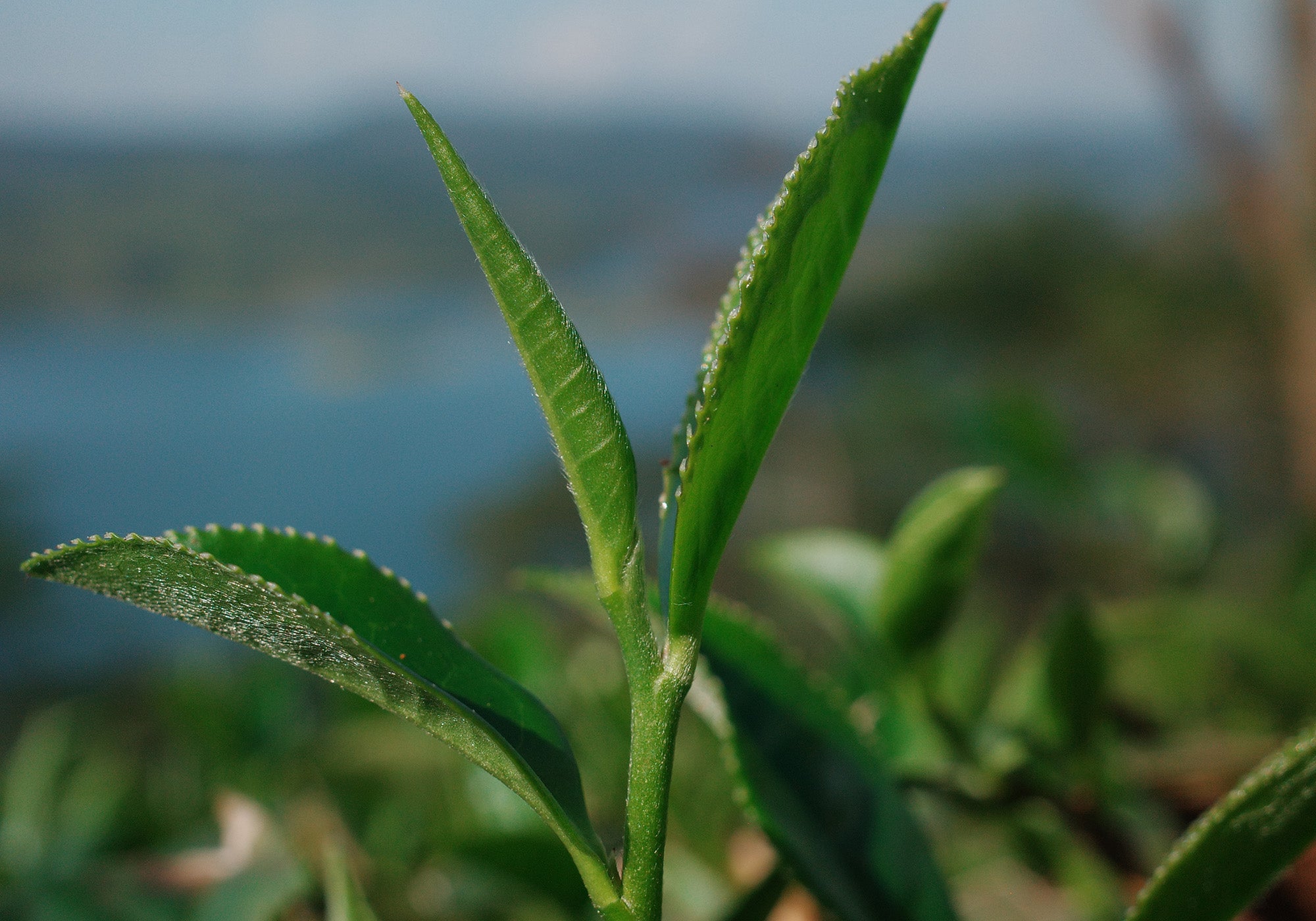
A report forgotten
In the nineteenth century, the British East India Company was not only a trading enterprise but also the driving force behind the British presence in India. The company sent surveyors across the entire subcontinent in search of areas suitable for tea production. Around 1840, they identified the hills of Meghalaya as a promising region: the climate and soil closely resembled those of the neighbouring regions, Assam and Darjeeling.
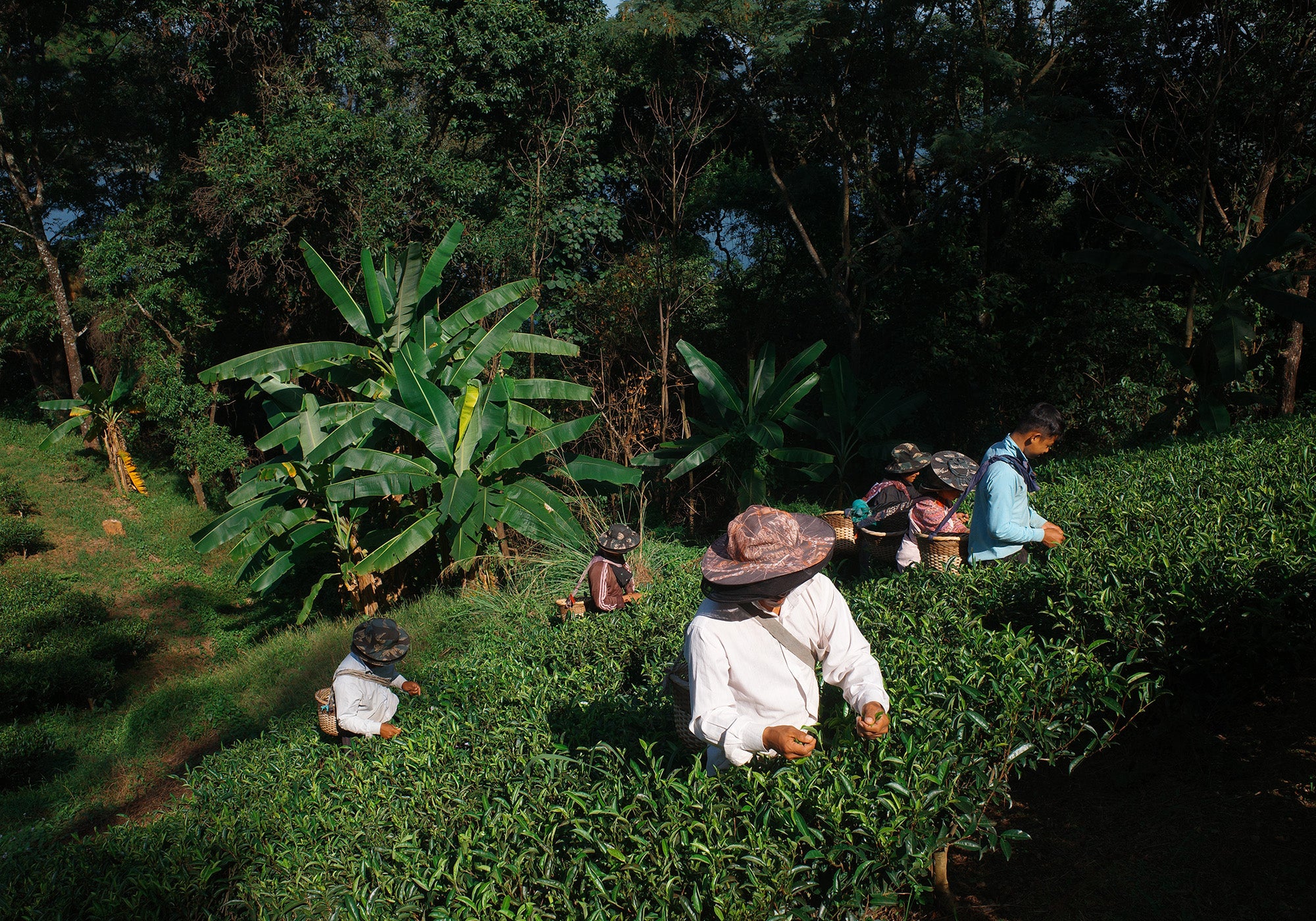
In Meghalaya, however, it never came to that. The Khasi, the indigenous community of the region, maintained their own rules on land use and resisted large-scale exploitation by outsiders. The British abandoned their plans for Meghalaya, partly because of the area’s remote location, and invested elsewhere. The surveyors’ report fell into obscurity.
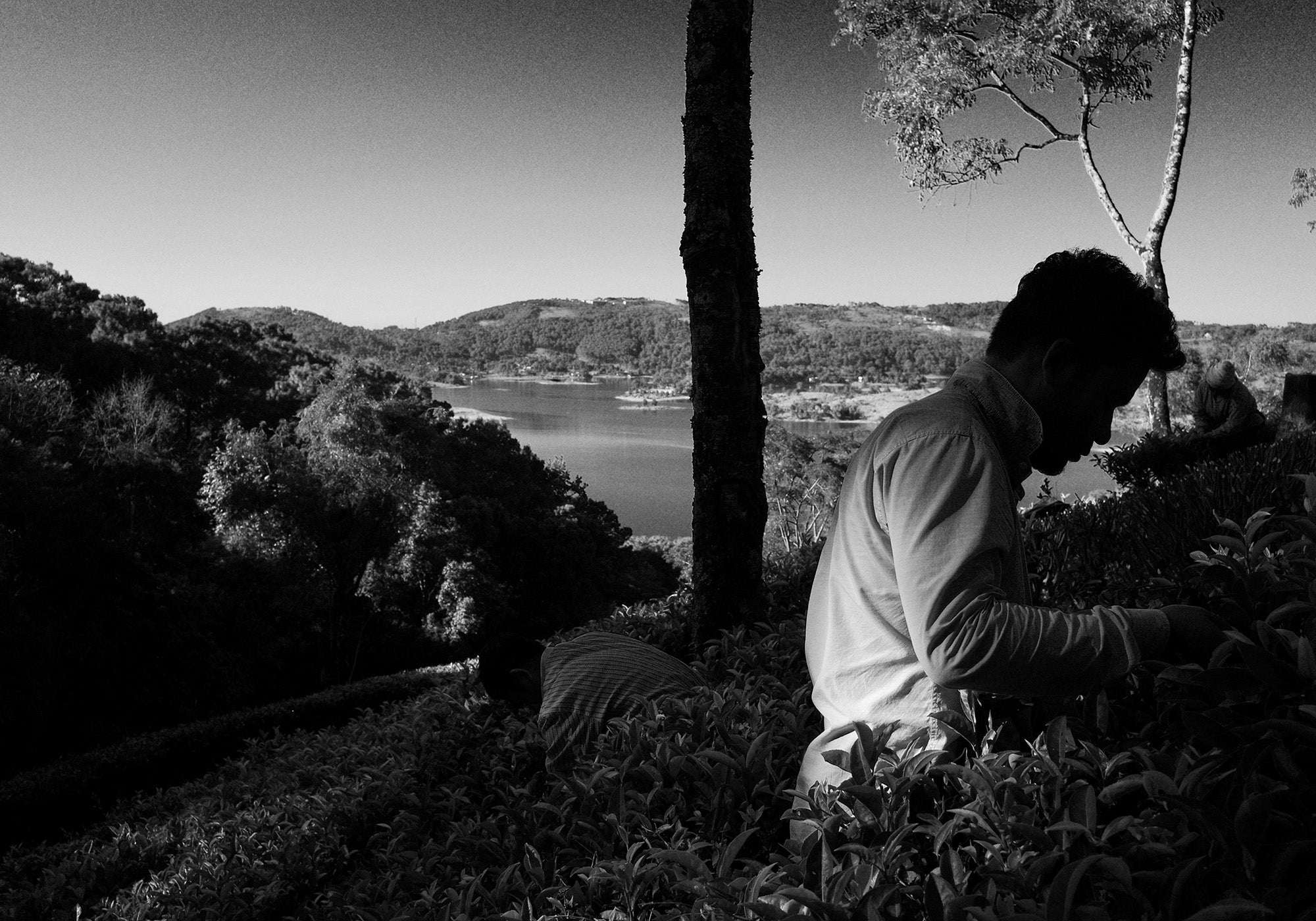
From Brussels to Shillong
The story of Lakyrsiew begins in the 1990s. Nayantara, a Khasi woman born and raised in Shillong, and her Dutch husband Geert Linnebank, a journalist at the Reuters news agency, had met each other in Brussels and built their lives in Europe.
Shillong remained a fixed part of their annual holidays, however. Nayantara had inherited a piece of land on the shore of Umiam Lake, also known as Barapani Lake. With each visit, trees disappeared from their land: felled, rolled down the slope, and taken away. Even the boundary markers seemed to shift each time. If they did nothing, they risked losing their property entirely.
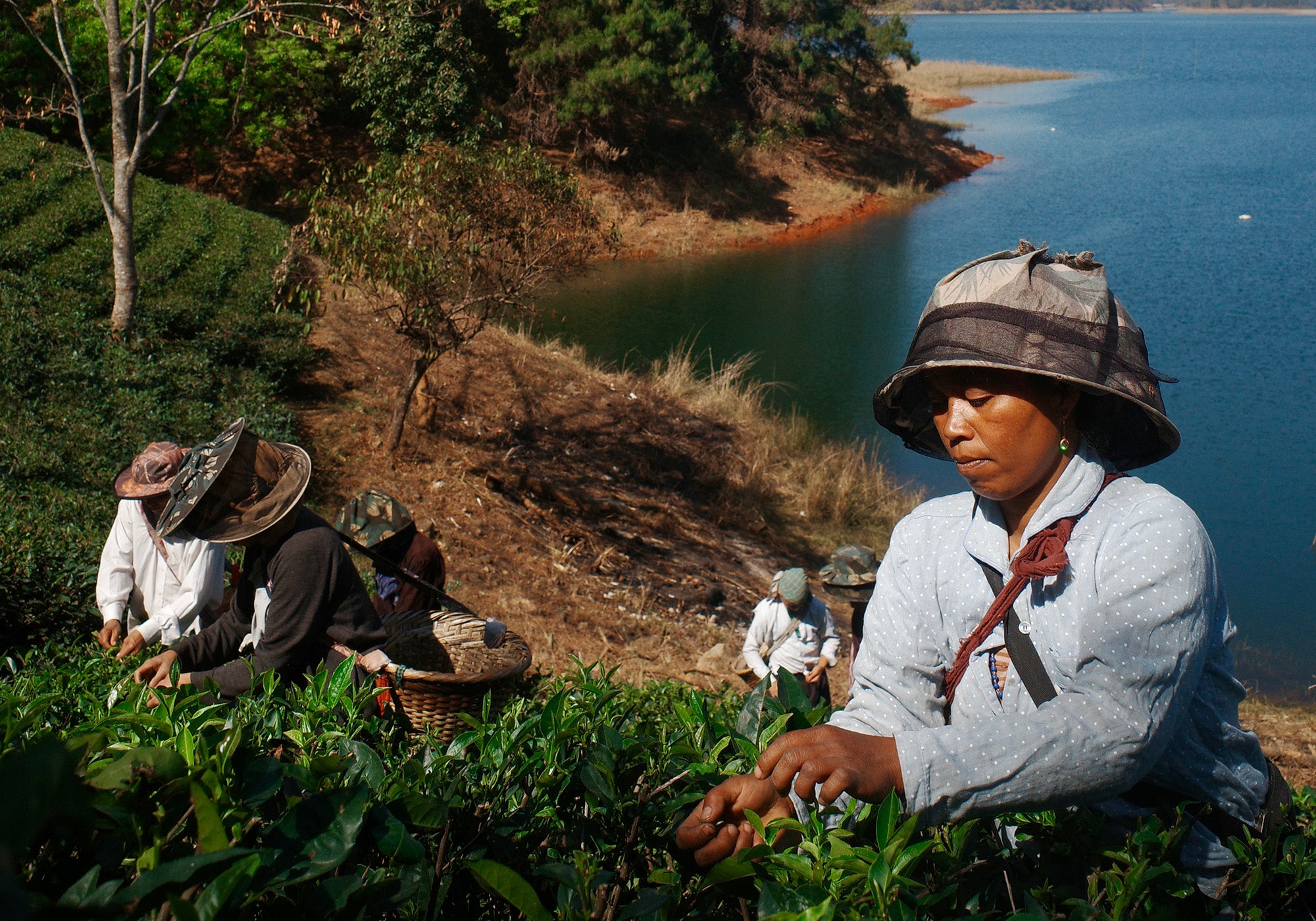
When Geert came across the old report by the British tea surveyors by chance, everything fell into place. The piece of land his wife had inherited lay exactly in the area the British had chosen a century and a half earlier. With the help of Bob Powell-Jones, an experienced Welsh tea planter who lived in Shillong with his Khasi wife, they began developing a garden around 2000. The first bushes were planted in 2002.
Building from scratch
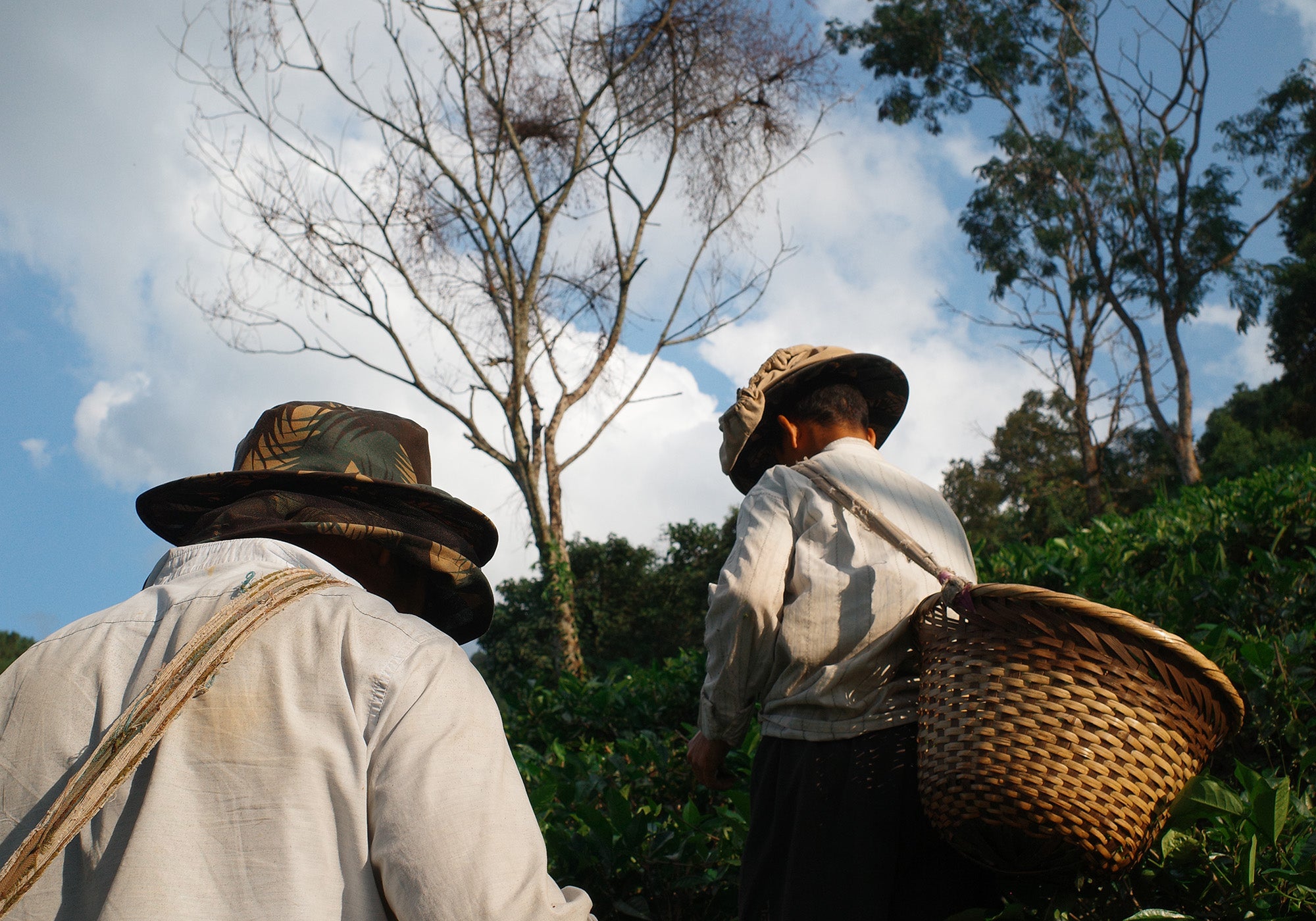
The years that followed, Geert Linnebank describes as a lesson in patience. It was not until 2007 that enough tea leaves were being harvested to justify a dedicated processing space: a former cowshed, converted into a micro-factory.
The first results were, by their own account, of variable quality. With the help of knowledgeable friends in the tea world, the process was adjusted and refined step by step. In 2012, the family decided to clear an entire planted field and replant it from scratch. The first yield had been large enough, but the quality did not meet their own standard.
Between Assam and Darjeeling
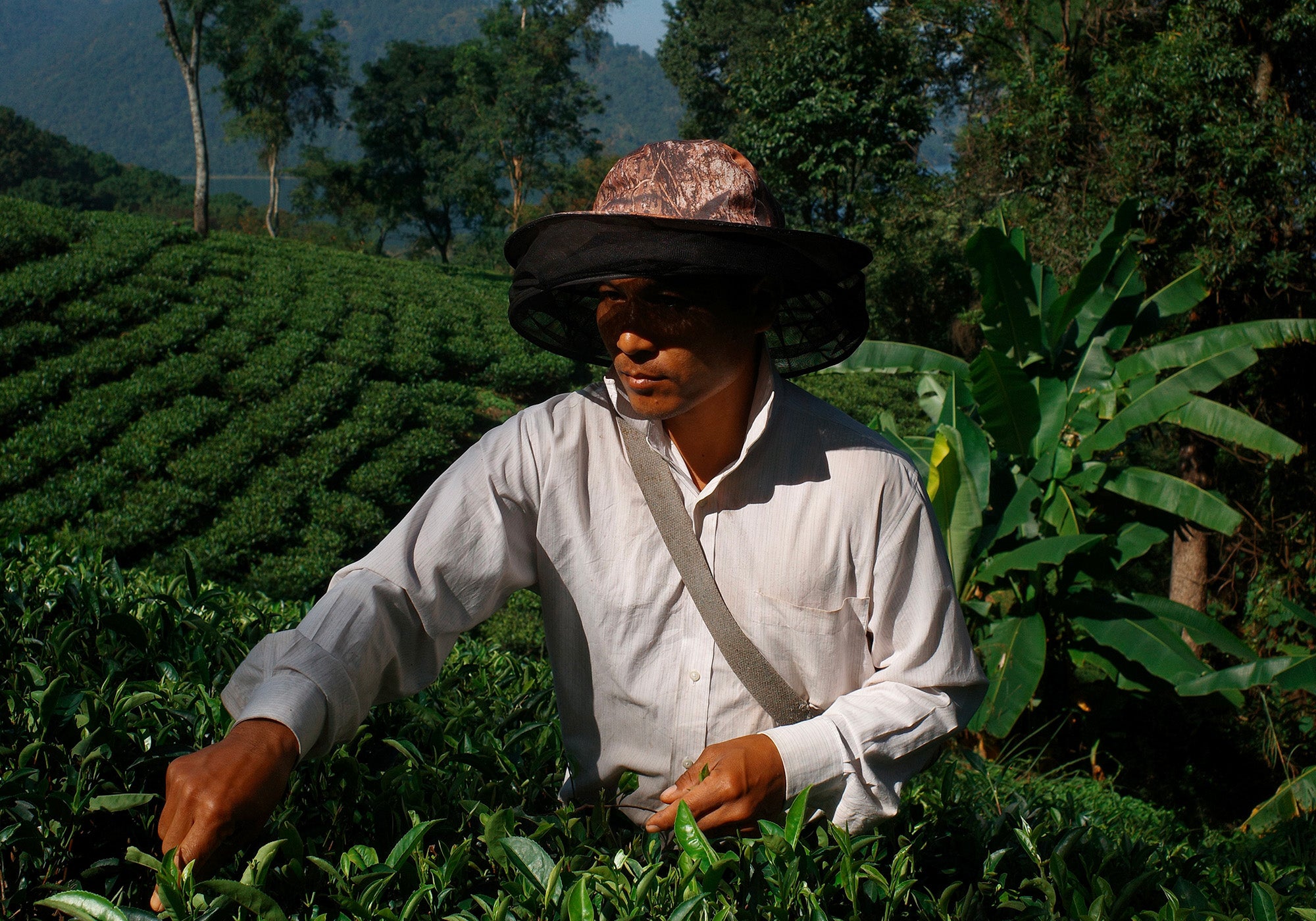
The location of Lakyrsiew, on the southern shore of Umiam Lake at an elevation of between 980 and 1,300 metres, creates its own microclimate: heavy monsoon rains and, in the dry season, a protective mist that hangs above the lake.
Geographically, Meghalaya lies between Assam and Darjeeling in the Himalayan foothills. That position is also reflected in the aromas: the infusion combines the full character of lowland tea with the finer, more floral notes found in highland tea.
Both Darjeeling cultivars and Chinese tea bushes grow on the estate. For more on how cultivars shape the flavour of tea, see our article on tea cultivars.
Some of the bushes are descended from plants that Nayantara’s ancestors put in the ground more than a century ago. The soil is rich in nutrients, in part because it has never been intensively cultivated. Lakyrsiew works without chemical pesticides, and the rows of bushes run across the slopes rather than along them, so the soil does not wash away in heavy rain.
Small volume, great care
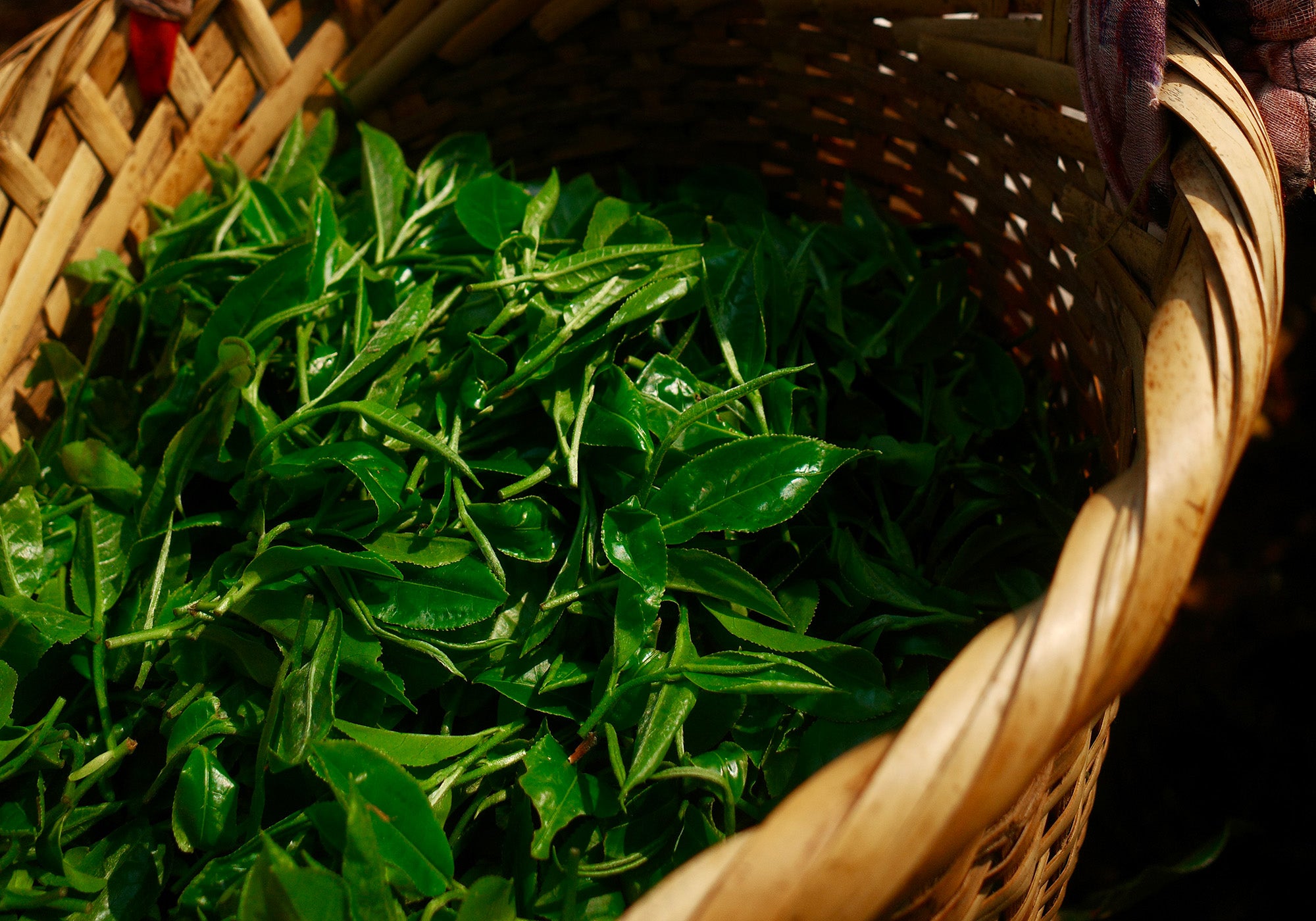
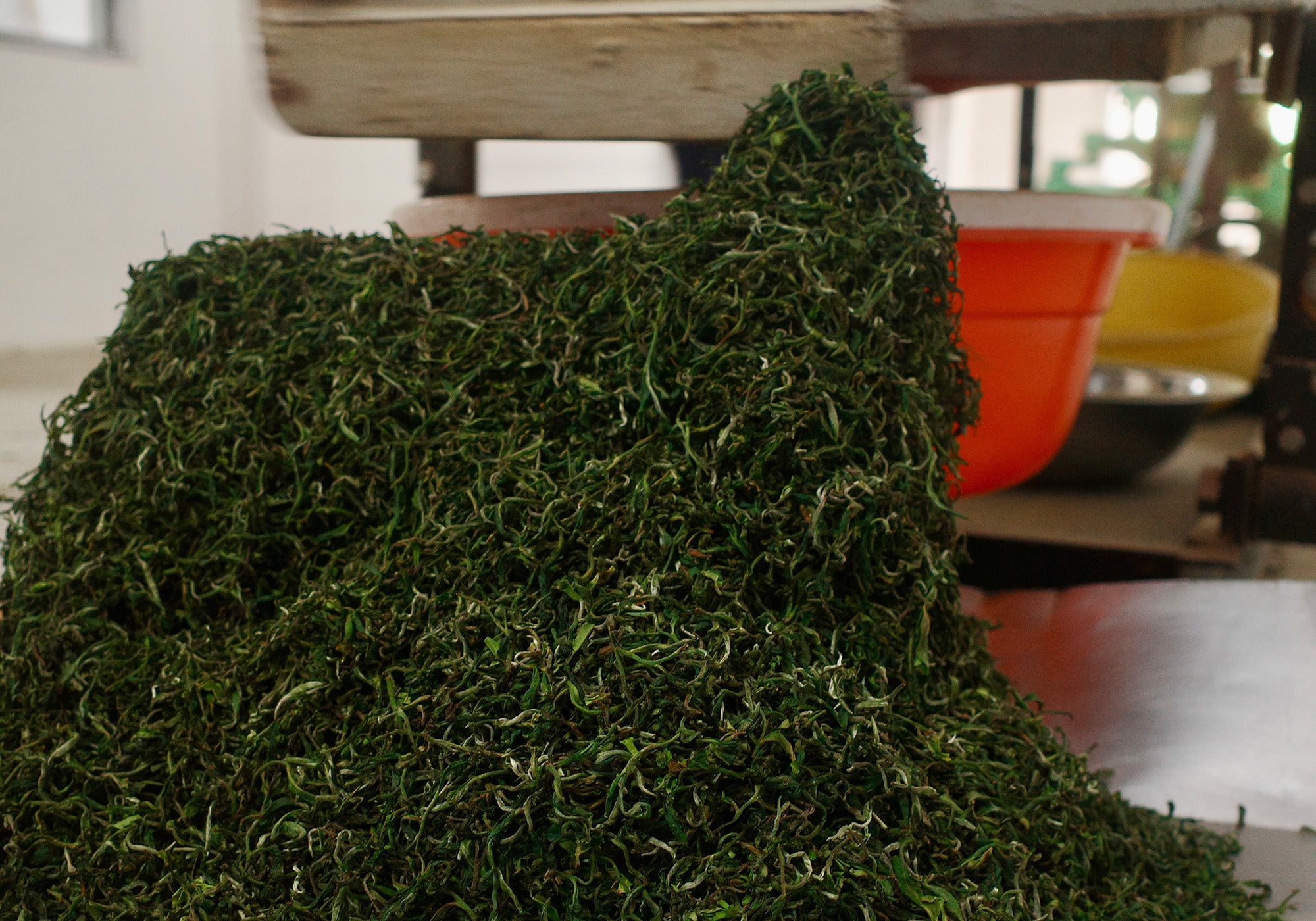
Lakyrsiew produces tea in limited quantities: just 5,000 kilograms per year. Some individual lots amount to no more than a few dozen kilograms. For black tea production, the entire process from picking to processing takes place within 24 hours, preserving the freshness of the leaves. The result is a tea with aromas of chocolate, caramel, honey, and stone fruit.
A name that means “awakening”
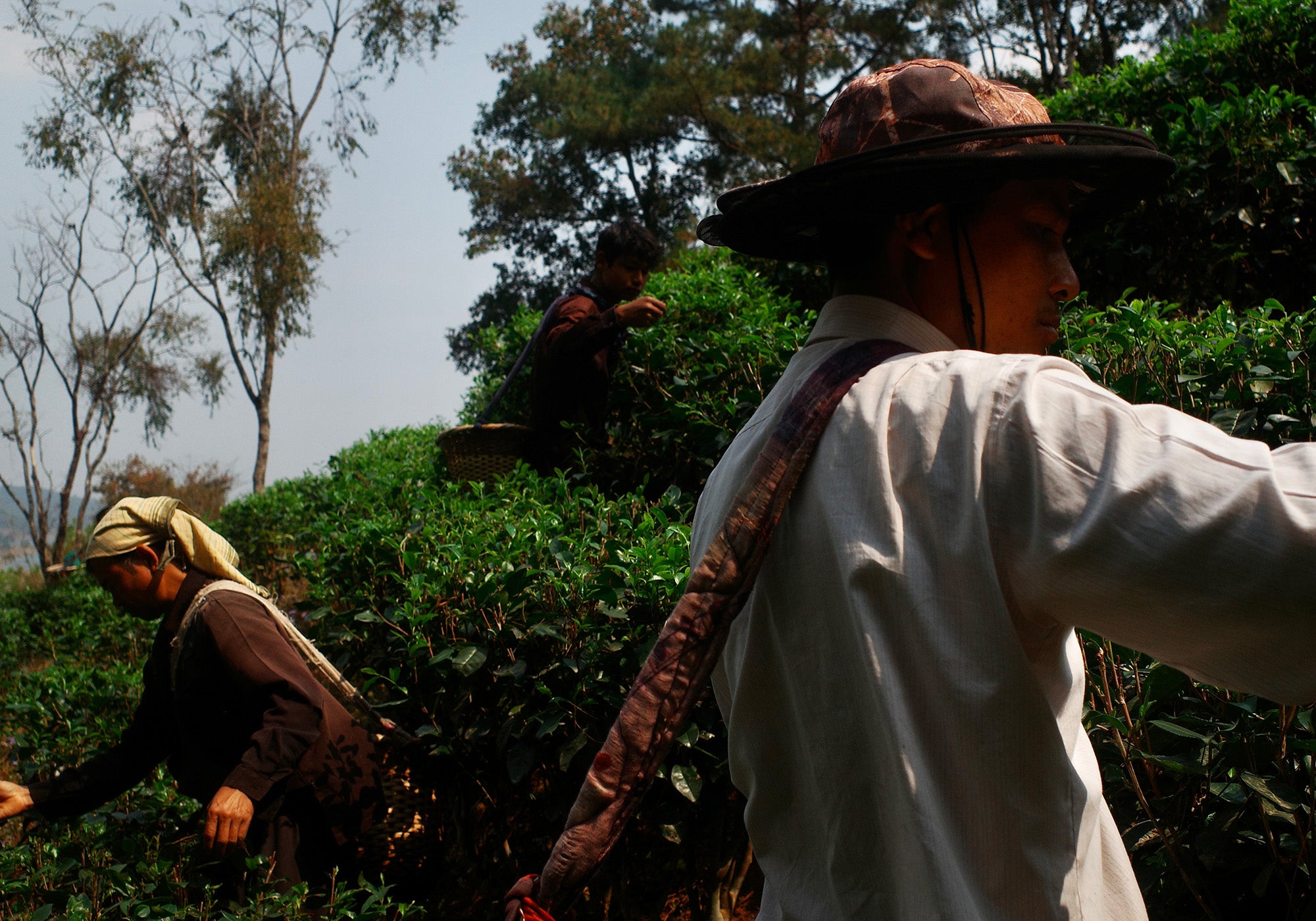
Lakyrsiew means “the awakening” in Khasi. The name refers to the rediscovery of a plan that had to wait a century and a half, and to the awakening of a tea region that has barely any recognition. Most of the work in the garden is still done by hand, and production remains small-scale. Yet the tea finds its way to specialist tea houses around the world.
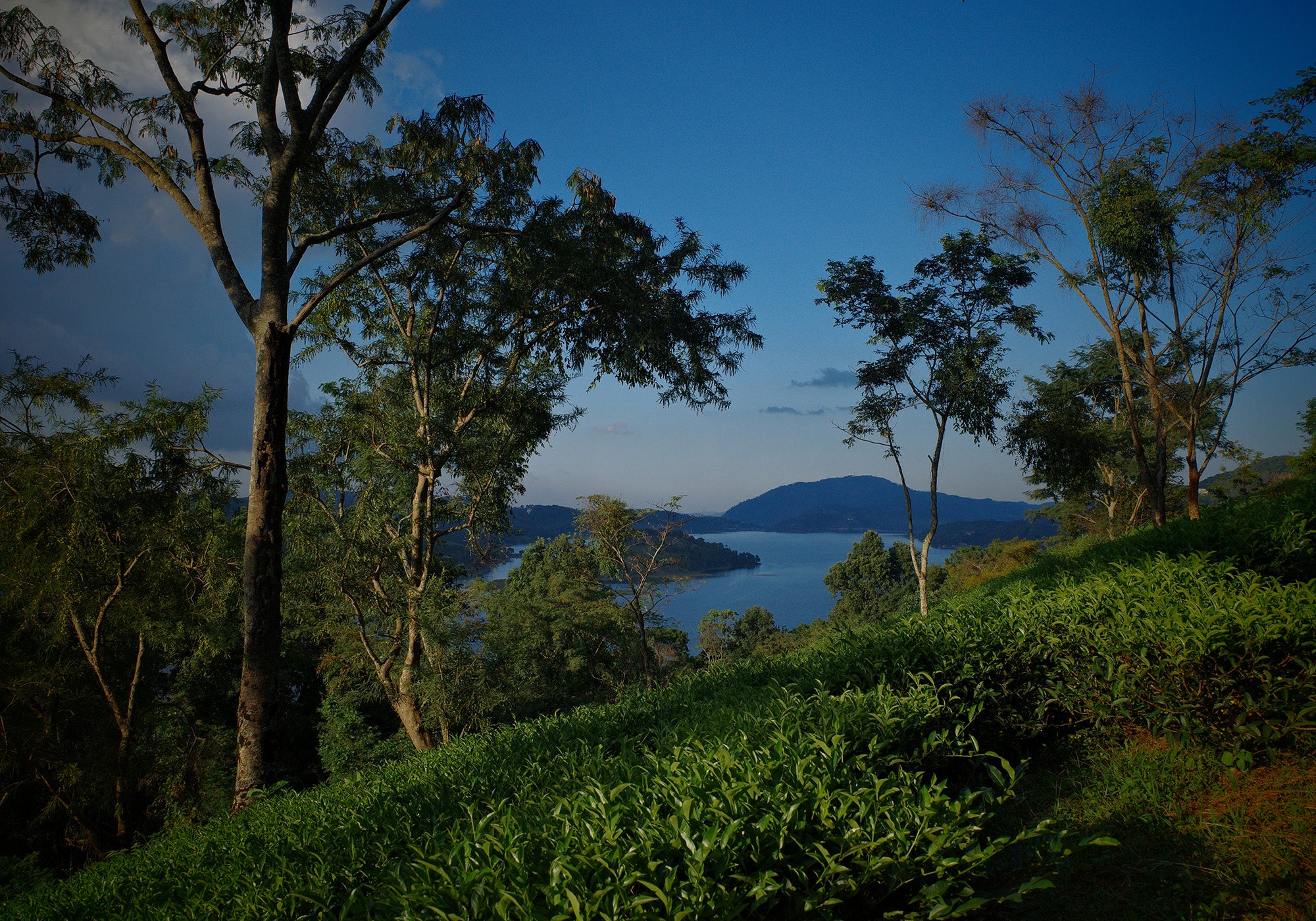
Lakyrsiew remains a family business. Boris, the son of Nayantara and Geert, now plays an important role in running the garden, with the support of tea expert Nalin. All employees come from the Meghalaya region and receive a fair, living wage. As a small-scale tea garden, Lakyrsiew benefits from fertile land that has never suffered under centuries of intensive plantation agriculture.
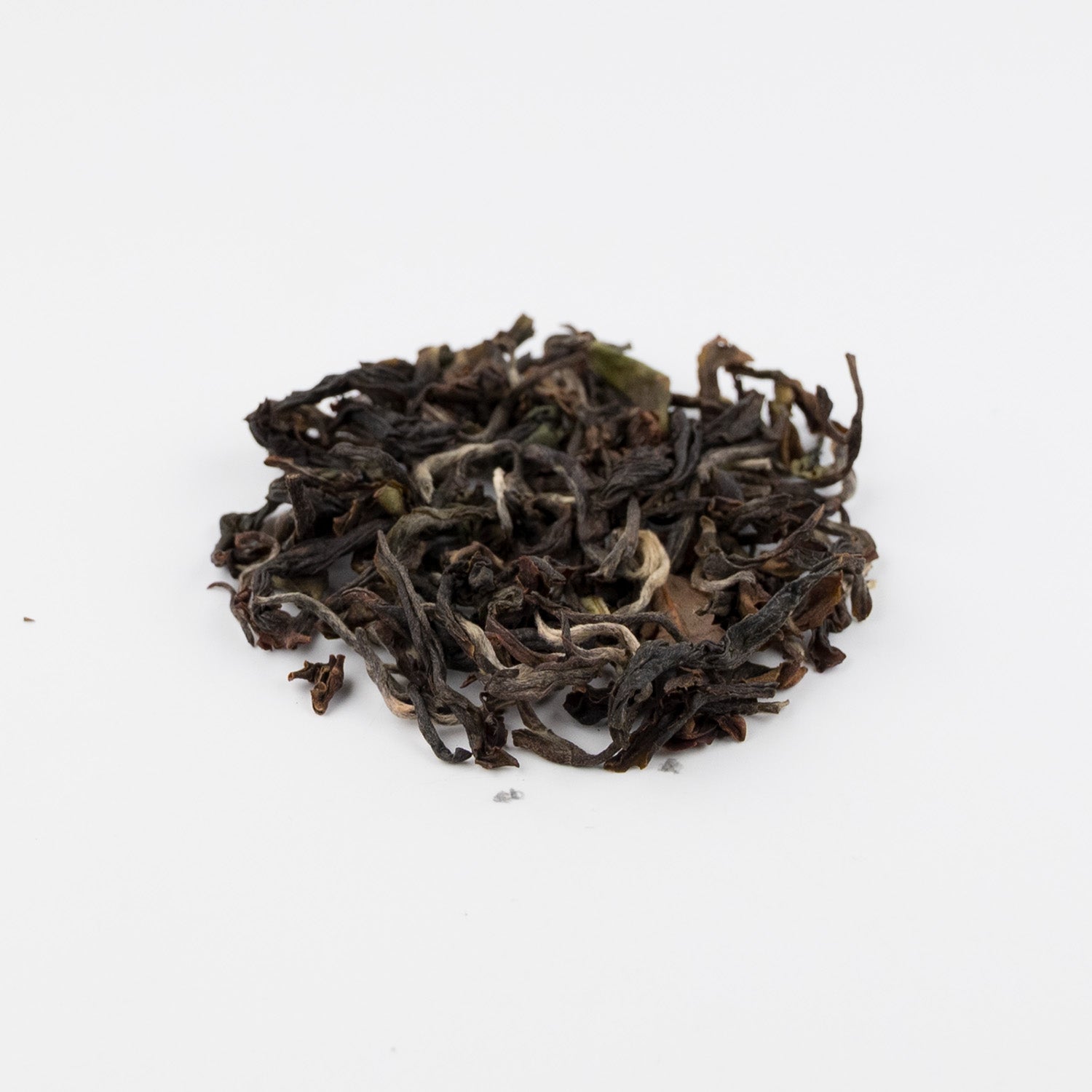
A black tea from Meghalaya, India, between Assam and Darjeeling.
Free Delivery
From €50 in BE and NL.

Pickup Available
In Zonhoven and Hasselt (BE).

Fast Shipping
Within 2-3 business days.

Secure Payment
Multiple payment options.