

Free Delivery
From €50 in BE and NL.

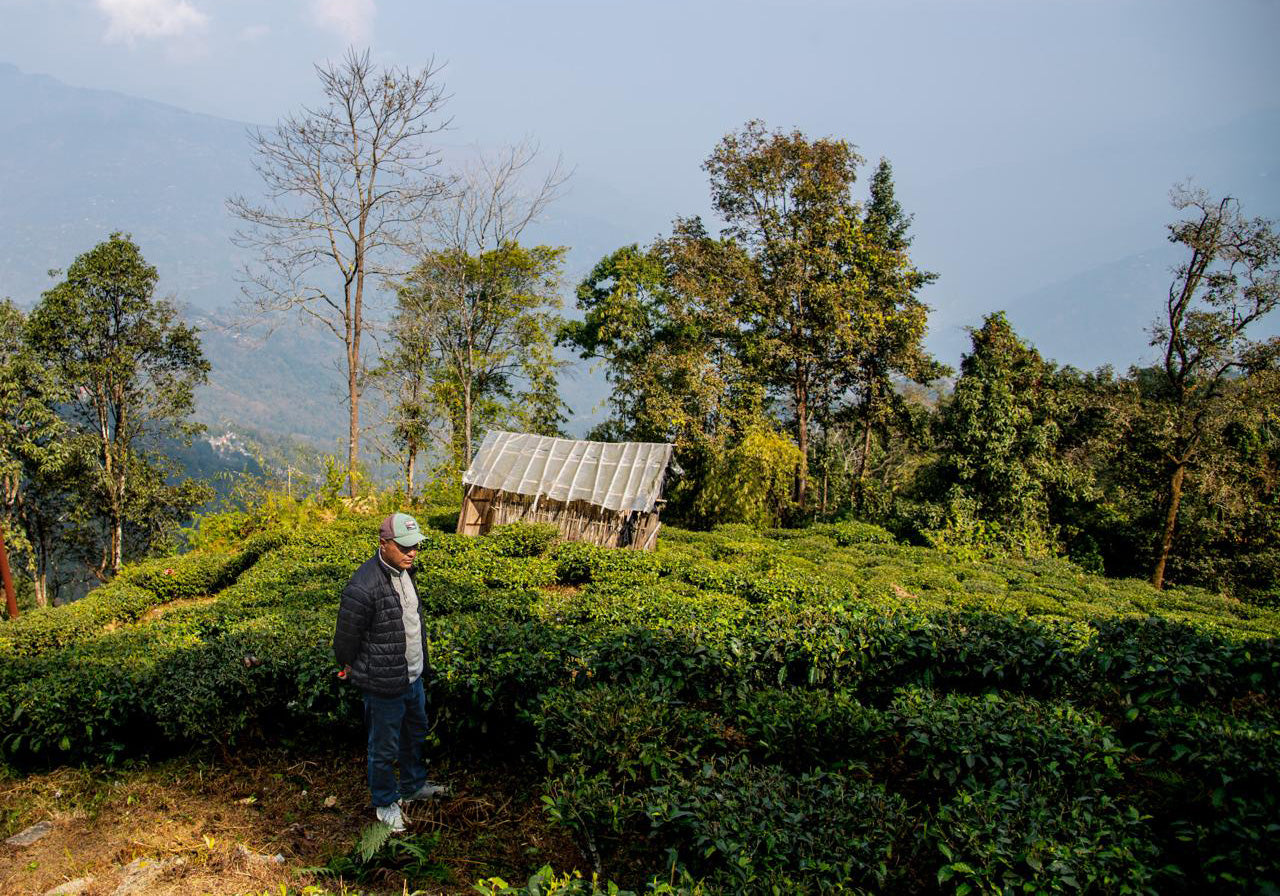
Darjeeling is home to 87 officially certified tea gardens. Together, they represent a name that is known worldwide when it comes to tea. Sonam Paljor Lama works in that same region, in the Teesta Valley. His family has managed the estate for nearly a century, at elevations between 1,300 and 1,850 metres, with views of Kanchenjunga, the third-highest mountain in the world.
The tea from Lama Tea Garden does not, however, qualify for that official recognition. The Geographical Indication label of the Tea Board of India is reserved for the large, historic estates. Small landholders like Sonam are excluded.
A valley with a long tea history
The Teesta Valley is one of the oldest tea-growing areas in Darjeeling. The first tea plants in the valley date from the period between 1841 and 1856. The valley stretches along the Teesta river, at elevations between 800 and 2,000 metres, with views to the north of Kanchenjunga, on the border with Sikkim and Nepal.
The tea sector in Darjeeling has been under severe pressure for some time. Total production from the 87 certified gardens fell from 10 million kilograms a decade ago to 6.5 million kilograms in 2022. Ageing bushes, climate change, and a prolonged strike in 2017, which caused output that year to drop to 3.2 million kilograms, have weakened the sector. Several estates were forced to close: Peshok Tea Garden, the direct neighbour of Sonam’s plots, ceased operations in 2015. 570 workers lost their jobs.
From Delhi to Chota Mangwa, via Nepal
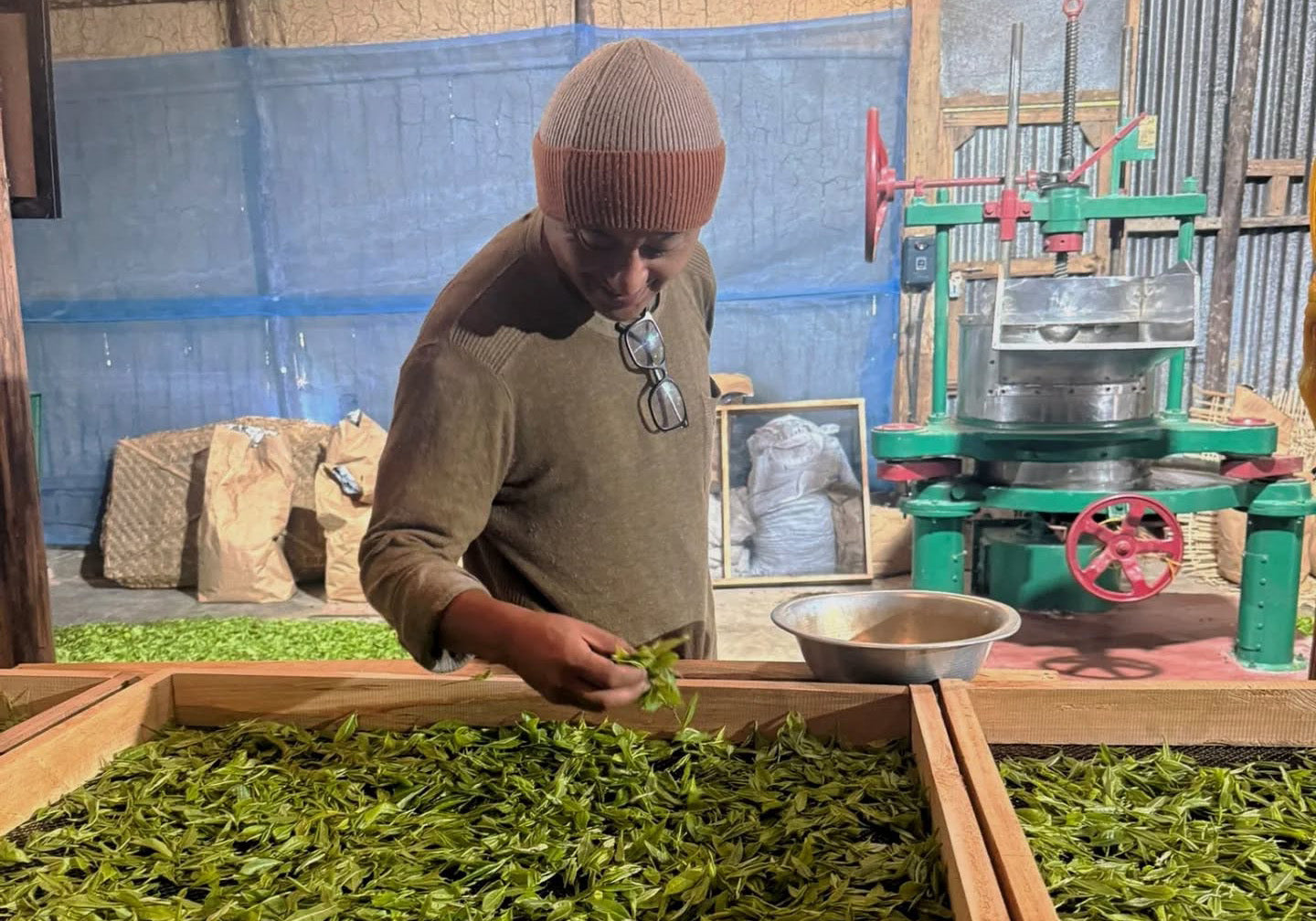
The story of Lama Tea Garden began in Delhi, where Sonam received a letter from his grandfather while studying. He was asked to return home and work in a tea garden. The family has a long connection with the tea sector: his grandfather worked as a planter for the British from 1932 onwards and laid the foundation for what would later become a 15-hectare garden. Before that, the hillsides were used for growing cardamom, a crop still found in the region today.
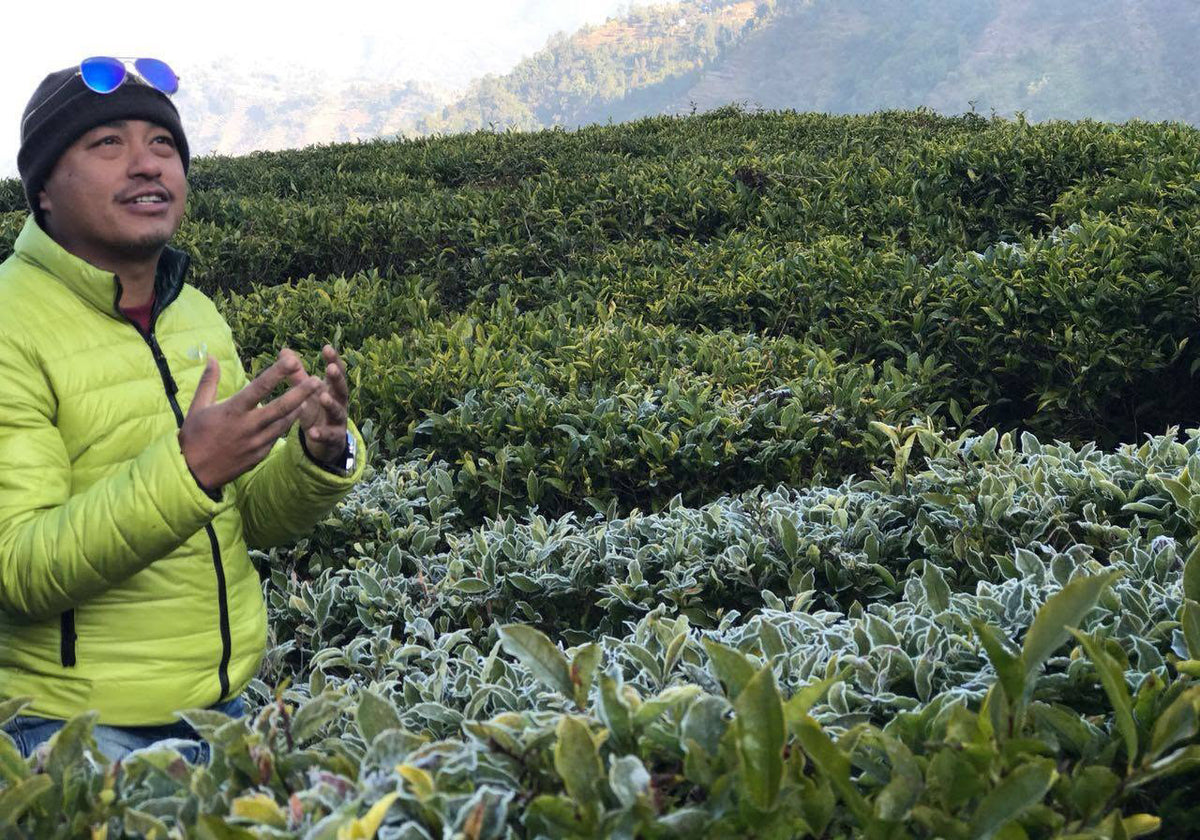
Sonam learned the trade but eventually left for Nepal, where he stayed for nearly 27 years. He settled in Fikkal, in the Ilam district, an area with a climate and tea culture comparable to Darjeeling. There he developed the concept of One Farmer, One Tea: visiting remote villages, introducing mini-factories so that farmers could process their harvested leaves on-site rather than sending them to large factories. In 2016, he founded La Mandala Specialty Tea, a family business that describes itself as the only fully carbon-negative tea factory in Nepal. He established a tea school there, mentored students from around the world, and saw around a dozen of his pupils go on to become independent tea masters.
Those years in Nepal taught him how culture can shape the character of tea. It was with that experience that he returned to Chota Mangwa.
The garden today
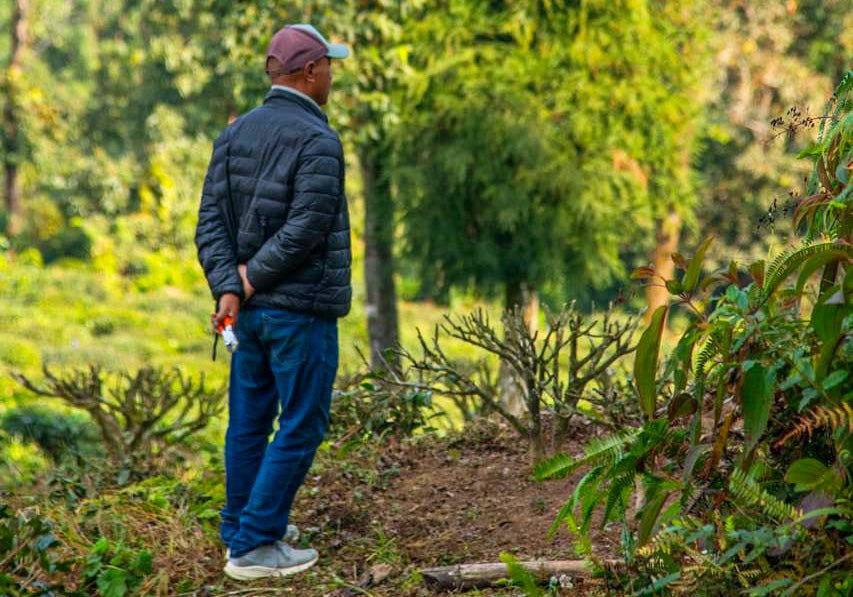
The estate lies on the southern slopes above the Teesta Valley, at elevations between 1,300 and 1,850 metres. On paper, ownership is divided among family members, but Sonam has taken all plots except his grandparents’ on long-term lease in order to consolidate the garden.
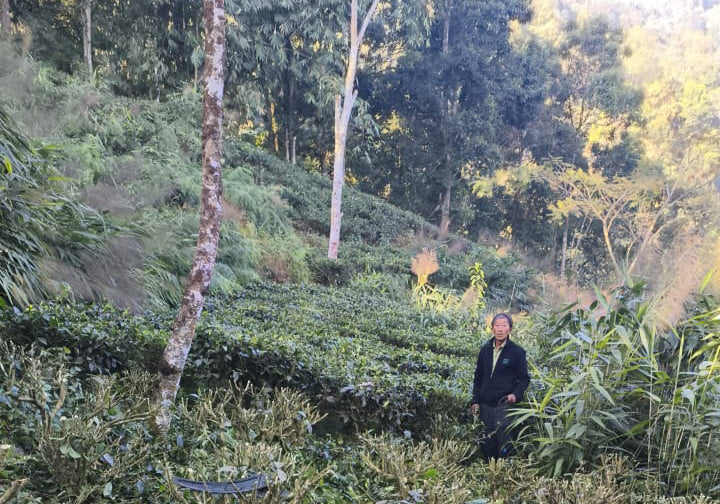
The plots are embedded in agroforestry: tea bushes grow among the trees of the surrounding woodland. The soil has never known the exhaustion of centuries of intensive plantation cultivation, and it shows: deer, wild boar, pangolins, pheasants, and a rich variety of insects live alongside the tea bushes.
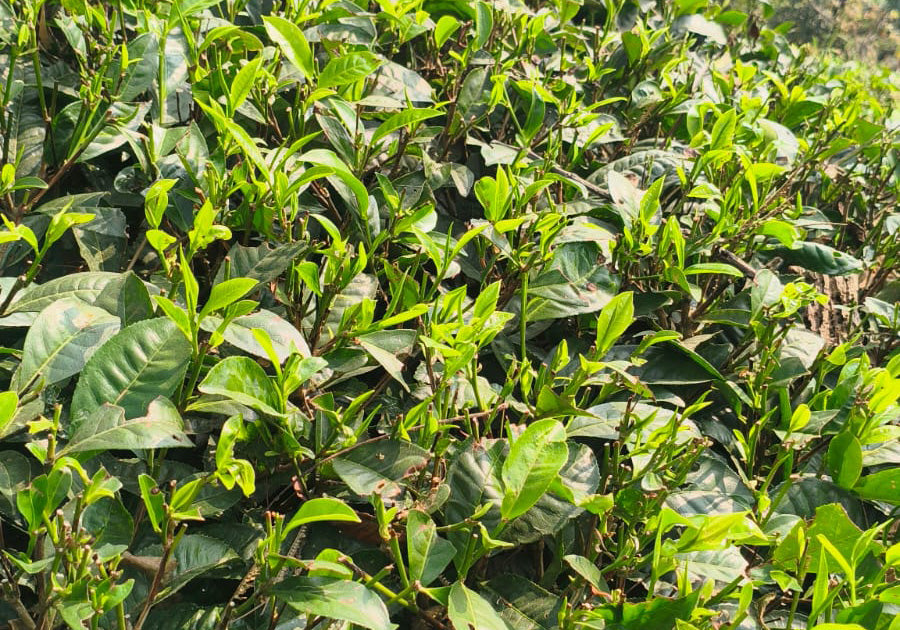
The estate contains newer cultivars (including B-157, B-668, T-78, and AV-2), older bushes of the Chinese variety, and hybrid Assam bushes. The latter have been present on the estate for over 90 years. For more on how cultivars shape the flavour of tea, see our article on tea cultivars.
Sonam works without chemical pesticides, as a matter of conviction. Obtaining an official label is not a goal: he does not see how an external body could meaningfully assess his land, his culture, and his way of working.
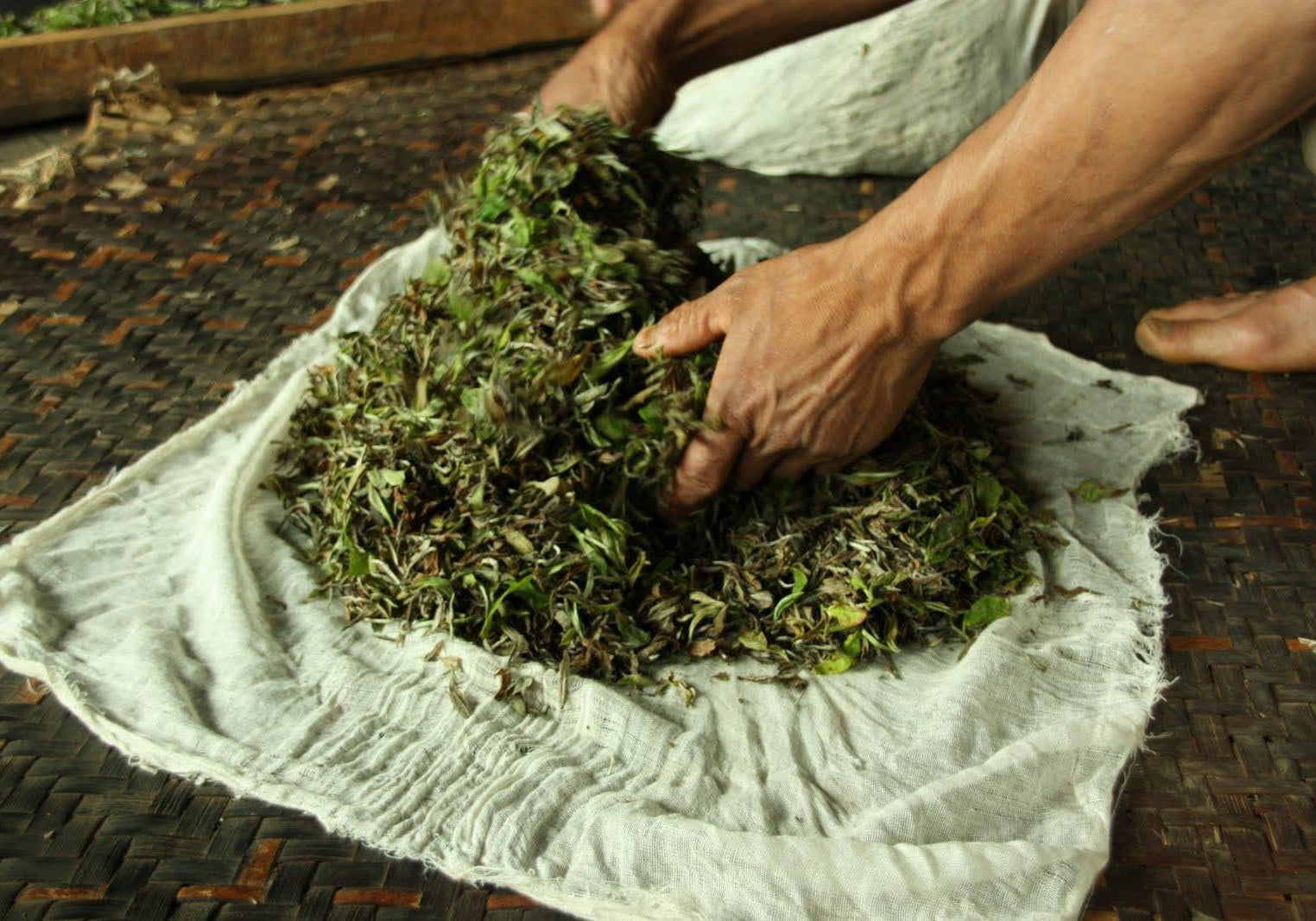
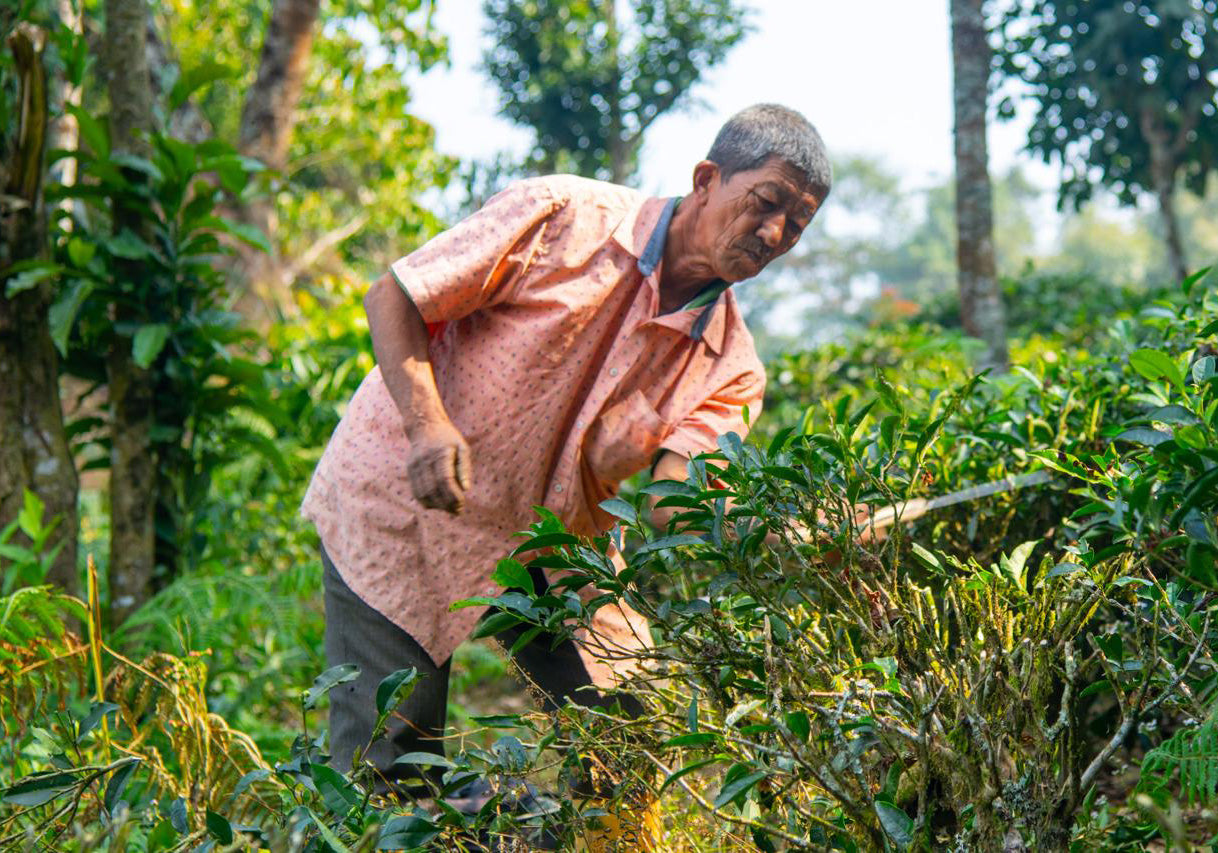
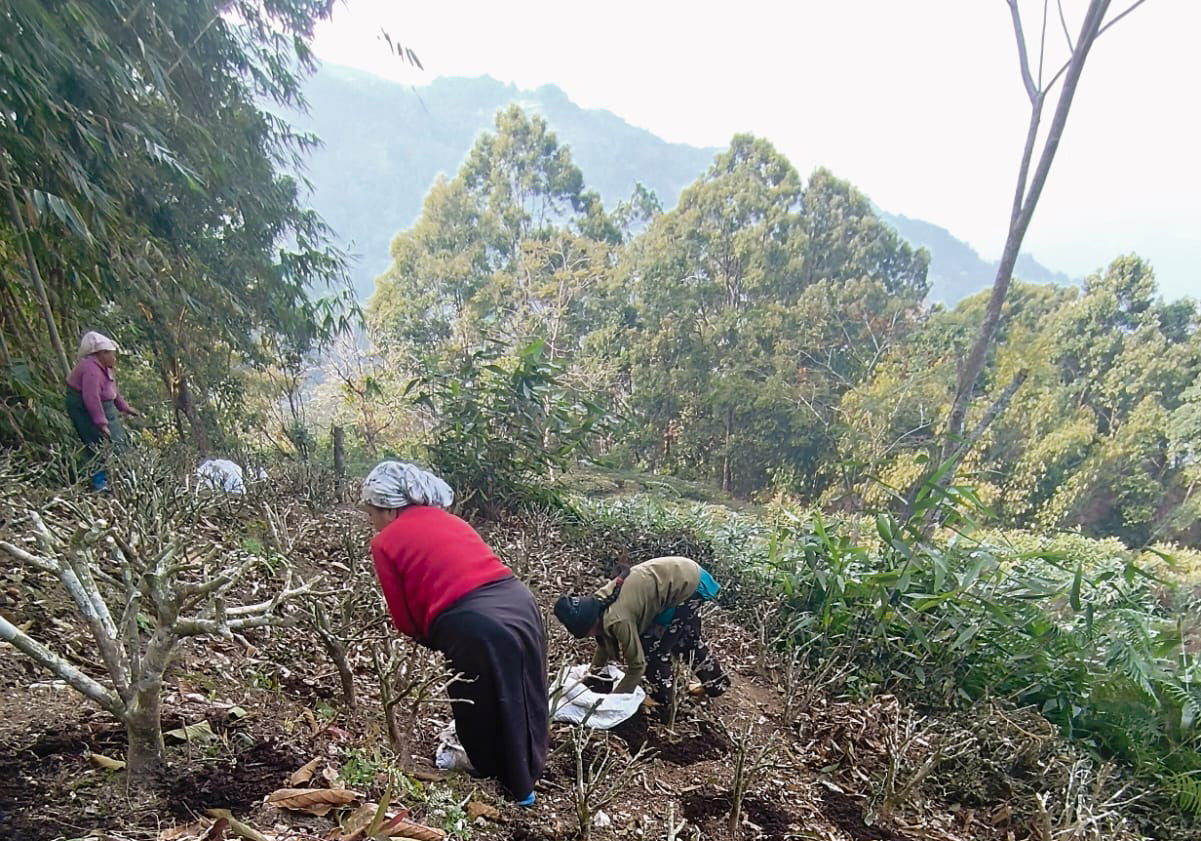
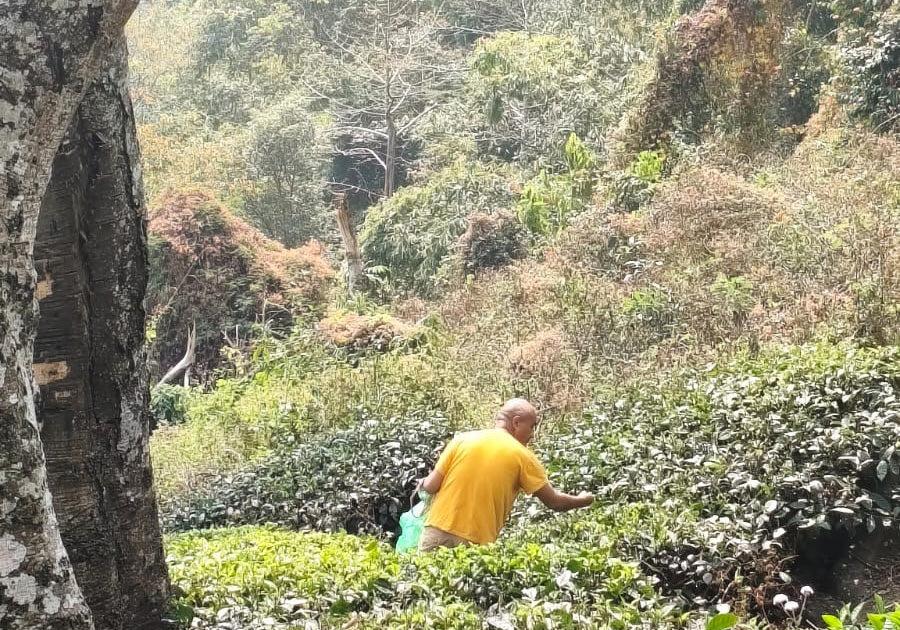
The processing space is built from bamboo and clay but contains modern machinery. For drying and heating the tea leaves, the factory uses no fossil fuels. All energy comes from locally generated hydropower. Picking is done entirely by hand, by 22 women from the surrounding villages. Sonam pays double the statutory minimum wage. The factory employs four male tea makers.
Not a standard Darjeeling
Most tea gardens in Darjeeling follow standardised processing methods that produce the typical Darjeeling style: a lightly oxidised black tea with the well-known muscatel character. Sonam deliberately takes a different path. He learned tea processing in the Chinese provinces of Zhejiang and Fujian, under the guidance of Professor Tsu. It is that approach he applies today in Chota Mangwa.
The processing method is adapted according to the quality and character of that day’s harvest. Sonam fires the tea leaves slowly and at low temperature, allowing them to mature over time. That is what makes Lama tea so difficult to capture in a single flavour description: the leaves evolve, and what you taste depends on when you taste it.
A tradition of a thousand years
Alongside black tea and oolong, Sonam has plans for pressed tea. This style has a history of over a thousand years in the region but has never been produced commercially. With pressed tea, the processed leaves are compressed into a block or cake. That form makes the tea easier to transport and store. The technique is best known in China and Tibet, where pressed tea was traded for centuries along the trade routes to Central Asia.
Those routes also passed through the region Sonam comes from. The local population drank sucha, a pressed tea with milk, butter, barley flour, and salt, closely related to Tibetan butter tea culture. Local variants added dried tree bark and herbs to the pressing. That tradition has largely disappeared, but Sonam wants to revive it with the knowledge he gained in China and Nepal.
The fight over a name
Darjeeling received its Geographical Indication label in 2004. The system is administered by the Tea Board of India and in theory guarantees the origin of the tea. In practice, the label is granted exclusively to the established large estates, united in the Darjeeling Planters Association. That association actively opposes the granting of GI numbers to small landholders.
A federation of small tea farmers in Darjeeling and Kalimpong, with two or three family factories, has been pushing back for years. Sonam is challenging his exclusion through legal proceedings. It is, in his own words, a matter of fundamental rights.
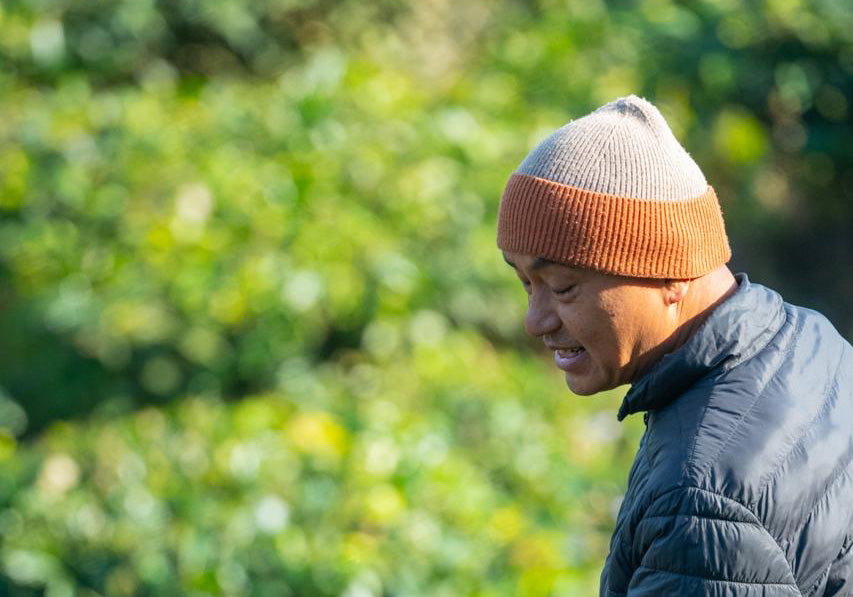
Lama Tea Garden and Tea Kulture
Sonam does not sell his tea to buyers at random. He looks for people who understand his work, respect his culture, and are willing to commit to a long-term relationship. That is precisely how Tea Kulture approaches collaboration: directly, without intermediaries, with attention to the person behind the tea.
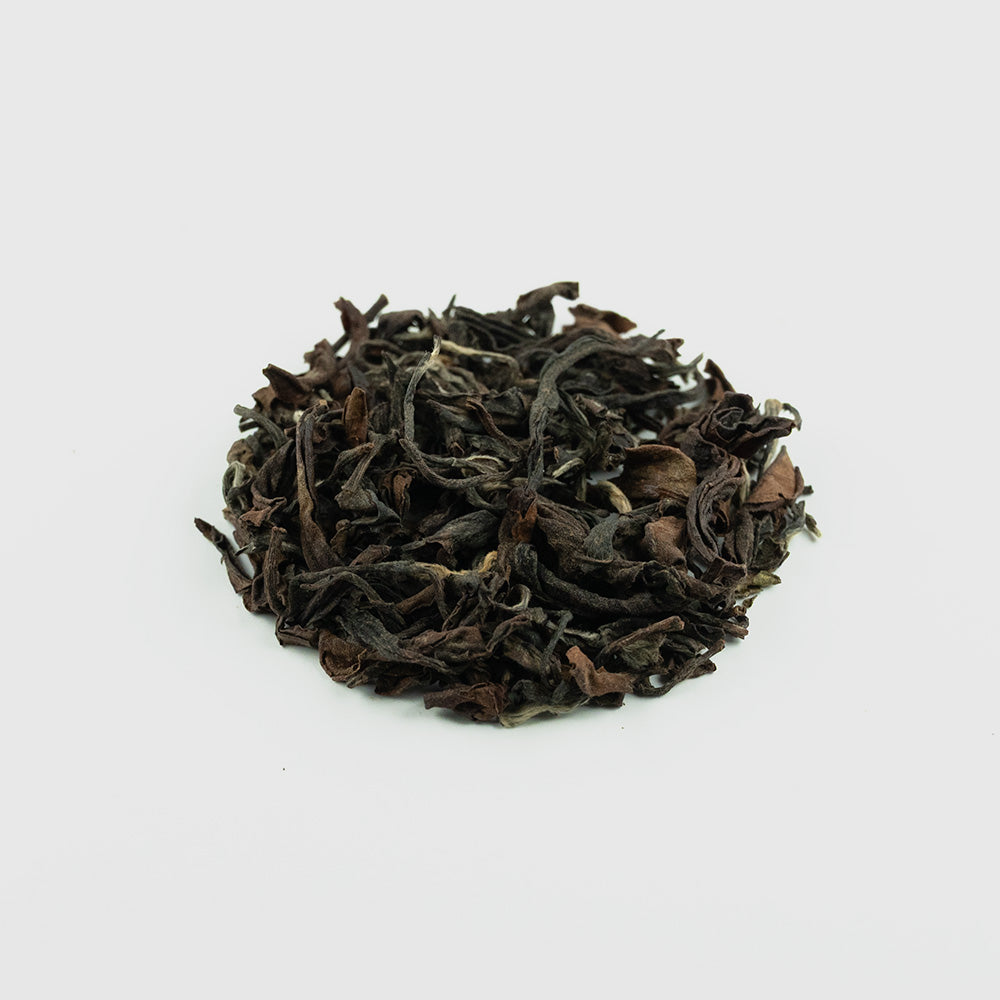
A black tea, processed using Chinese techniques, from the Teesta Valley (India).
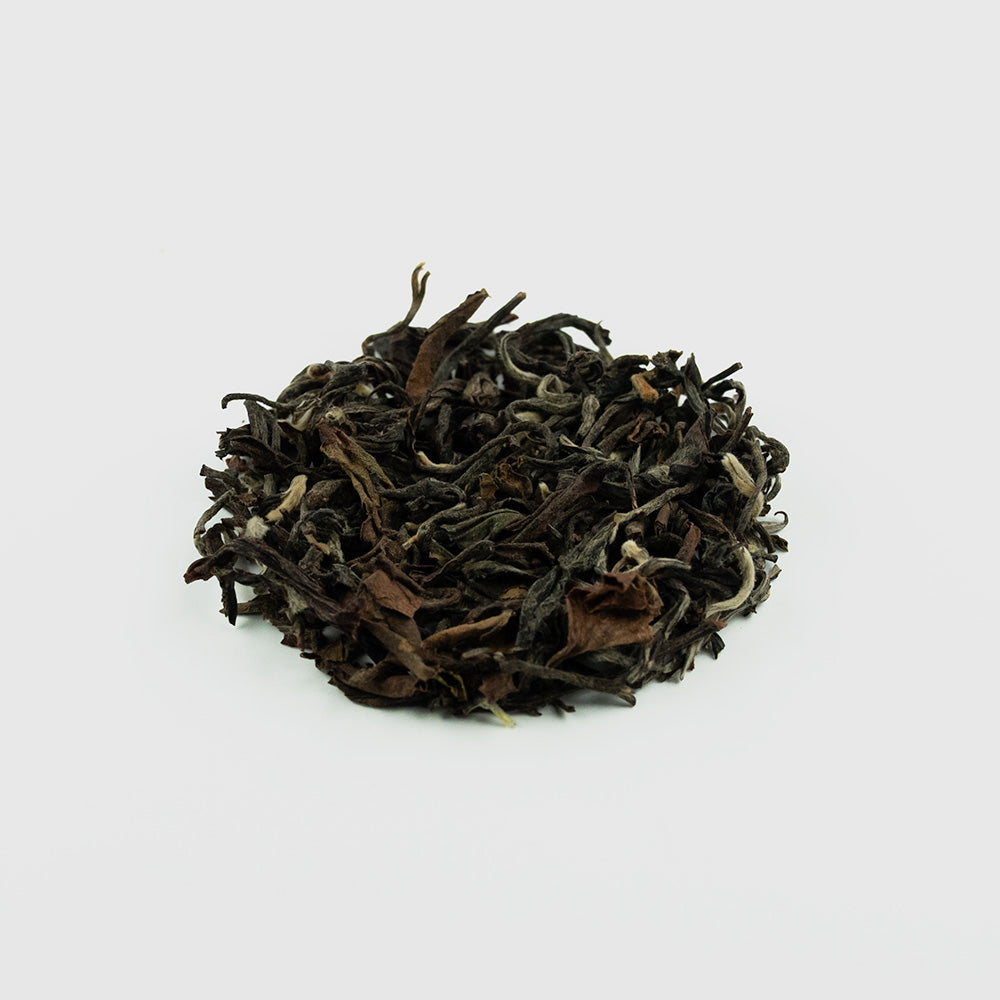
A black tea from an estate among the forests of the Teesta Valley (India).
Free Delivery
From €50 in BE and NL.

Pickup Available
In Zonhoven and Hasselt (BE).

Fast Shipping
Within 2-3 business days.

Secure Payment
Multiple payment options.