
,%20also%20known%20as%20%22true%20chamomile%22,%20a...)

Free Delivery
From €50 in BE and NL.
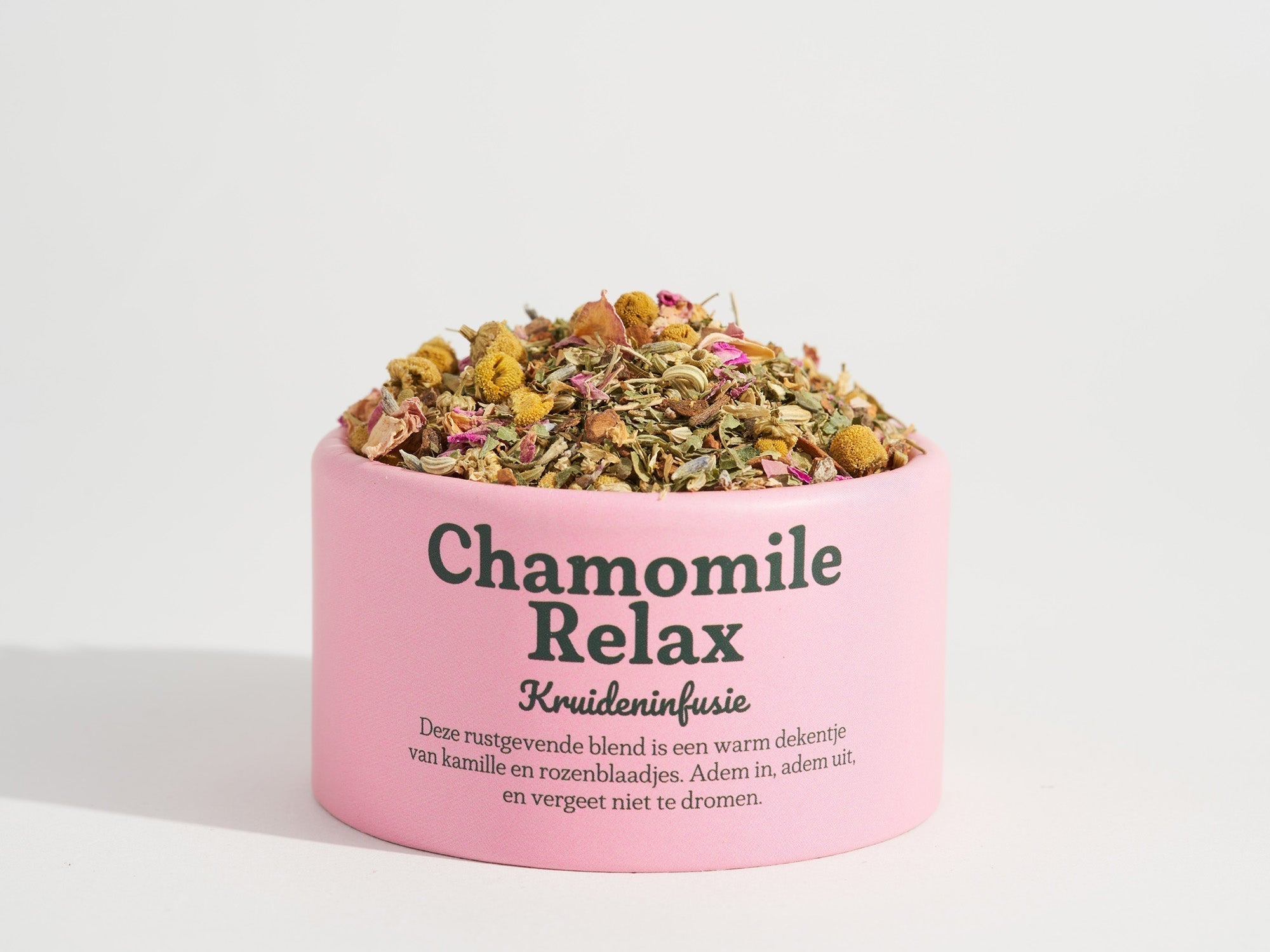
Chamomile is one of the most widely used ingredients in herbal infusions and blends worldwide. Its gentle, floral flavour and calming character make chamomile an ideal companion for moments of relaxation, whether enjoyed as pure chamomile tea or combined with other herbs and flowers.
The name "chamomile" is used for several plant species within the Asteraceae family. The two most important varieties are German chamomile (Matricaria chamomilla), also known as "true chamomile", and Roman chamomile (Chamaemelum nobile).
German chamomile is the variety used for chamomile tea and in blends. It grows upward towards the light. The Roman variety is a creeping ground-covering plant with a less pleasant flavour, and is used primarily in skincare products.
Both species have been used for thousands of years. Read more about the history of chamomile.
The difference between chamomile of good and lesser quality is significant: fresh, whole flowers give a richer aroma and fuller flavour than the broken or older flowers often found in standard tea bags.

Chamomile tea has a floral and lightly sweet flavour. A subtle earthy undertone is sometimes present, depending on the steeping time and the quality of the flowers.
The key aromatic element in chamomile, bisabolol, has a scent reminiscent of honey and apple. It is no coincidence that the name "chamomile" comes from the Greek chamaimēlon, literally "apple of the earth". A cup of fresh chamomile tea is indeed reminiscent of a wonderful apple crumble.
Chamomile has been popular across various cultures for thousands of years. Below we discuss the most common reasons why people drink chamomile tea. For some, there is scientific support; for others, the evidence is less strong.
Rest and relaxation
This is the best-known quality of chamomile. Several compounds contribute to its calming character: apigenin binds to receptors in the brain involved in relaxation, while chamazulene and bisabolol have traditionally been associated with a soothing effect.
Supporting sleep
Chamomile tea is a classic bedtime drink. The warmth and natural properties of chamomile have traditionally been used to unwind before sleep.
Chamomile tea also contains no caffeine, making it an excellent choice in the evening, in contrast to true tea (from the Camellia sinensis plant) which does contain caffeine.
Read more about caffeine in tea.
Digestion
In folk medicine, people have been drinking chamomile for stomach and digestive complaints for centuries. Chamomile has traditionally been used to soothe the digestive tract. Many people therefore enjoy a cup of chamomile tea after a meal.

Chamomile tastes wonderful on its own, but its mild, floral base also makes it an excellent ingredient for blends. Chamomile allows other herbs to shine without overpowering them, and often enhances their calming character.
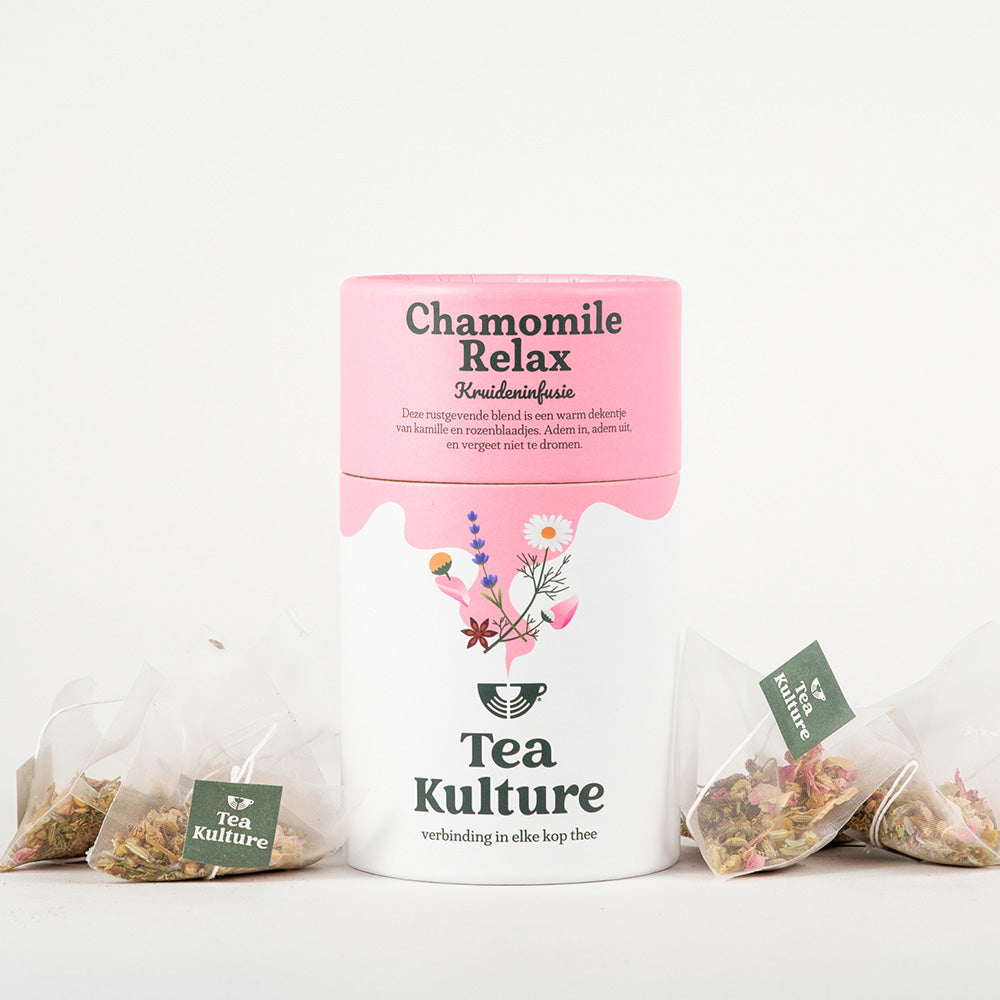
At Tea Kulture, we have developed several blends in which chamomile plays a central role. Discover our Chamomile Relax, a blend of chamomile, rose petals, and lavender.
Chamomile suits any time of day:
There is no official guideline, but most people drink 1 to 3 cups a day without any issues. If you are drinking chamomile tea specifically for relaxation in the evening, a cup around 30 to 45 minutes before bed is a good moment.
Parents have been giving children chamomile tea for generations, for instance when restless or with mild stomach complaints. Because chamomile tea contains no caffeine, it is also suitable for children. Always start with a light infusion (short steeping time). If in doubt, discuss it with your GP or paediatrician.
Making a relaxing cup of chamomile tea is straightforward.
Heat water to 95–100°C. Use 2 teaspoons (2 grams) of dried chamomile per cup of 200 ml. Pour the water over the flowers and steep for 4 to 5 minutes. This is longer than for regular tea, but necessary to release all the flavours and aromas. Remove the flowers and enjoy.
You can add a teaspoon of honey or a slice of lemon to taste. The same brewing principles apply to blends containing chamomile.

The chamomile in many standard tea bags consists of finely ground flower remnants, known as "dust". This produces a quick but flat flavour. Loose, whole chamomile flowers retain their essential oils better and give a richer, fuller aroma.
Tea Kulture deliberately chooses blends with whole, high-quality flowers. The difference is immediately noticeable: a more complex flavour, a more intense aroma, and more of the natural compounds for which chamomile is known.
Online you will find many confident claims about chamomile tea: that it fights cancer, strengthens the immune system, or lowers cholesterol. Those claims deserve nuance.
Chamomile does contain interesting compounds that show certain effects in laboratory studies. But a laboratory study is not the same as evidence in humans. That is why we remain cautious.
What we can say: people have been drinking and valuing chamomile for thousands of years. That long tradition tells us something. We do not promise miracles. But we do offer a wonderful, calming tea that has been selected with care.
Does chamomile tea contain caffeine?
No, chamomile tea is entirely caffeine-free. It is herbal infusion, not a "true" tea from the tea plant (Camellia sinensis). You can therefore drink it at any time of day without concern about caffeine.
Does chamomile tea really help with sleep?
Many people find that chamomile tea helps them to relax before bed. Hard scientific evidence that it improves sleep quality is limited, but the calming evening routine it involves is valued by many.
When should I drink chamomile tea for a relaxing evening?
Around 30 to 45 minutes before bed. This gives your body enough time to wind down.
How many cups of chamomile tea can I drink per day?
Most people drink 1 to 3 cups a day without any issues. There is no official guideline, but as with everything: listen to your body.
Can I give chamomile tea to my child?
Parents have given children chamomile tea for generations for restlessness or mild stomach complaints. Start with a light infusion and see how your child responds. If in doubt, discuss it with your GP or paediatrician.
How long should chamomile tea steep?
4 to 5 minutes for the best flavour. This is longer than for regular tea, but necessary to draw out all the flavours and aromas from the flowers.
What is the difference between loose chamomile and tea bags?
Loose, whole chamomile flowers retain their essential oils better than the finely ground chamomile in many standard tea bags. The result: a richer flavour and a more intense aroma.
How we handle tea bags is explained in Tea bags without microplastics: the choice for corn PLA.
Can I drink chamomile tea every day?
Yes, most people can drink chamomile tea daily without any issues. It is caffeine-free and mild in flavour.
How do I store chamomile?
Store chamomile in an airtight, opaque tin in a cool, dark place. Keep it away from moisture, heat, and strong aromas such as coffee or spices. This preserves the flavour and aroma for the longest time.
Discover chamomile at Tea Kulture
At Tea Kulture, you will find carefully selected chamomile, sourced directly from small producers who work with respect for people and nature.

From Nuwara Eliya to Ruhuna: The Seven Tea Regions of Sri Lanka
From the misty mountaintops of Nuwara Eliya to the tropical coastal plains of Ruhuna: Sri Lanka is small enough to cross in a single day. But it also comprises seven tea regions, each with exceptio...
Read more
The surprising history of chamomile
Chamomile has been used for thousands of years. From the ancient Egyptians to the monastery gardens of the Middle Ages, from Hippocrates to Beatrix Potter: this modest herb has a remarkably rich hi...
Read more
Varieties and cultivars: the basis of every tea aroma
Tea has an enormous richness of aromas and characters. As with wine and coffee, the story begins with the plant itself. The choice between varieties and cultivars determines the aroma and quality o...
Read moreFree Delivery
From €50 in BE and NL.

Pickup Available
In Zonhoven and Hasselt (BE).

Fast Shipping
Within 2-3 business days.

Secure Payment
Multiple payment options.